
"The stock market is a device for transferring money from the impatient to the patient." — Warren Buffett
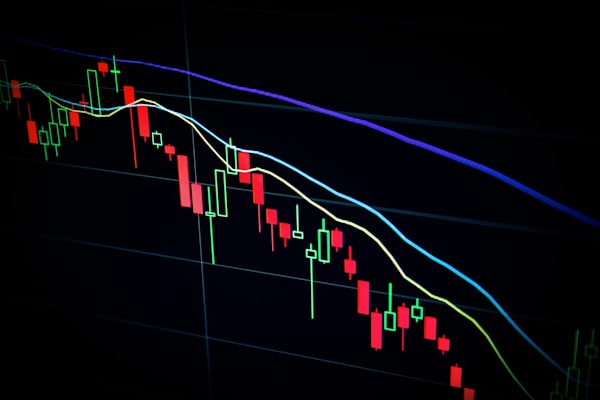
Every year, millions of people open a brokerage account with big ambitions — and most of them lose money within the first twelve months. Not because the stock market is rigged (it isn't), and not because they're unintelligent. They lose because they walk in thinking trading is about picking the right stocks, when it's actually about managing risk, controlling emotions, and understanding a game that's been running far longer than they have.
This guide is for the person who's curious, maybe has a little money set aside, and wants to understand what the stock market actually is before putting real dollars on the line.
What the Stock Market Actually Is
The stock market is a marketplace where people buy and sell ownership stakes in companies. When you buy a share of Apple or Tesla, you're buying a tiny piece of that business. If the company grows and becomes more valuable, your slice is worth more. If it declines, your slice is worth less.
There are two broad ways people make money in the market:
- Investing: Buying and holding assets over years or decades, letting compounding do the work
- Trading: Buying and selling over shorter timeframes — days, weeks, or months — trying to profit from price movements
Most beginners think they want to trade. Most of them would be better off investing. The distinction matters enormously.
The Brutal Reality of Active Trading
Studies consistently show that 80–90% of day traders lose money over a multi-year period. The ones who profit are usually professionals with faster data, better tools, and years of pattern recognition behind them. This isn't to say trading is impossible — but it is to say that if your plan is to quit your job and trade full-time in six months, you need a much bigger reality check than most YouTube channels will give you.
That said, understanding trading makes you a better investor. Let's start with the fundamentals.
Key Concepts Every Beginner Must Know
Stocks, Indices, and ETFs
- Stock: A share in a single company (e.g., NVIDIA, Amazon)
- Index: A benchmark tracking a basket of stocks. The S&P 500 tracks the 500 largest US companies. The Nasdaq tracks tech-heavy companies.
- ETF (Exchange-Traded Fund): A fund that trades like a stock but holds many assets. An S&P 500 ETF like VOO or SPY gives you instant diversification across 500 companies with one purchase.
For most beginners, ETFs are the single best starting point. You get exposure to the whole market without needing to pick individual winners.
Bull Markets and Bear Markets
- Bull market: Prices are rising, optimism is high, everyone looks like a genius
- Bear market: Prices are falling 20% or more from recent highs, panic sets in, beginners panic-sell at the worst time
The critical insight: bear markets are temporary, but the losses you lock in by panic-selling are permanent. Every bear market in history has eventually recovered.
Bid, Ask, and Spread
When you look up a stock price, you'll see two numbers:
- Bid: What buyers are willing to pay
- Ask: What sellers are willing to accept
- Spread: The difference between the two
For large, heavily traded stocks like Apple, this spread is tiny (fractions of a cent). For small, illiquid stocks, the spread can be wide — meaning you're already at a disadvantage the moment you buy.
The Four Types of Orders You'll Actually Use
Understanding order types is non-negotiable. Getting this wrong costs real money.
1. Market Order
Buys or sells immediately at the current market price. Fast and simple, but you have no control over the exact price you get. Fine for large, liquid stocks. Dangerous for small-cap, thinly traded stocks where prices can move wildly.
2. Limit Order
You set the maximum price you're willing to pay (buy limit) or the minimum you'll accept (sell limit). Your order only executes at your price or better. This is what most experienced traders use.
3. Stop-Loss Order
Automatically sells your position if the price drops to a specified level. This is your safety net — it caps how much you can lose on a trade. Beginners who skip stop-losses are the ones who turn a -10% loss into a -60% loss while "waiting for it to come back."
4. Stop-Limit Order
A combination: triggers when a price hits your stop level, then executes as a limit order. Gives more control but risks not filling in fast-moving markets.
Reading a Stock: The Basics
You don't need to be a CFA to understand a stock. But you do need to know what the numbers mean.
Price-to-Earnings (P/E) Ratio
The P/E ratio tells you how much investors are paying for each dollar of a company's earnings. A P/E of 20 means you're paying $20 for every $1 of annual profit.
- Low P/E: Potentially undervalued, or the market expects slow growth
- High P/E: Market expects strong future growth — or the stock is overpriced
Context matters. A P/E of 30 is expensive for a bank, but reasonable for a fast-growing tech company. Always compare within the same industry.
Market Capitalization
Market cap = share price × total shares outstanding. It tells you the total value of the company.
| Category | Market Cap |
|---|---|
| Large-cap | $10B+ |
| Mid-cap | $2B–$10B |
| Small-cap | $300M–$2B |
| Micro-cap | Under $300M |
Large-caps are more stable. Small-caps offer more growth potential — and more risk.
Earnings Reports
Every public company reports earnings quarterly. These reports reveal revenue, profit, and guidance for the future. Markets react violently to earnings surprises. A company can beat expectations and still drop if the guidance disappoints. Never hold a speculative position through an earnings report unless you fully understand the risk.
The Mistakes That Destroy Beginners
These aren't theories. These are the patterns that appear over and over in trading forums, brokerage post-mortems, and financial therapy sessions.
Mistake 1: Letting Losses Run
The human brain hates realizing a loss. So instead of selling a stock down 20%, beginners hold on, convincing themselves it'll come back. Sometimes it does. Often it doesn't. A disciplined trader accepts small, planned losses and moves on.
"Cut your losses short. Let your winners run." — Every experienced trader, always.
Mistake 2: FOMO Buying
You see a stock up 40% in a week. You jump in. It immediately reverses. You just bought someone else's exit. By the time a massive move is on the news, the people who made money on it have largely already sold.
Mistake 3: Overtrading
More trades ≠ more profit. Each trade has costs (commissions, spreads, taxes on gains). Many beginners trade out of boredom or the need to feel active. The best trades are often the ones you don't make.
Mistake 4: Ignoring Taxes
In most countries, short-term capital gains (assets held under a year) are taxed at a higher rate than long-term gains. A 30% tax on your short-term profits can completely erase the edge you thought you had. Know your tax situation before you trade.
Mistake 5: Using Money You Can't Afford to Lose
The market will test you emotionally. If you're trading with rent money or emergency funds, you will make fear-based decisions. Only trade with money whose loss would not materially damage your life.
A Sensible Starting Framework
If you're genuinely new and want to learn without destroying your capital, here's a realistic path:
Step 1: Paper Trade First
Most brokerages and apps (Thinkorswim, Webull, TradingView) offer paper trading — simulated trading with fake money but real market prices. Spend 1–3 months paper trading before touching real money. You'll discover your own emotional patterns in a consequence-free environment.
Step 2: Start with an Index ETF
Put your first real investment into something like VOO (Vanguard S&P 500 ETF) or QQQ (Nasdaq-100 ETF). You're investing in the entire market's growth rather than betting on any single company. Historically, the S&P 500 has returned roughly 10% annually over the long run.
Step 3: Learn One Strategy Deeply
Don't try to learn day trading, swing trading, options, and crypto simultaneously. Pick one approach, study it obsessively for 6–12 months, and actually understand why it works before adding complexity.
Step 4: Keep a Trading Journal
Write down every trade: why you entered, your target, your stop-loss, and the outcome. Review it weekly. Patterns in your mistakes become visible fast when you track them honestly.
Step 5: Size Your Positions Properly
A general rule: never risk more than 1–2% of your total account on a single trade. If you have $5,000, that means a maximum loss of $50–$100 per trade. This sounds conservative — until you have five consecutive losing trades and you're only down 5–10% instead of 50%.
What Key Takeaways
-
The market rewards patience, not activity. Most beginners overtrade and underinvest. The S&P 500 has compounded at ~10% per year for a century. Doing nothing is often the best trade.
-
Risk management is the real skill. Making money is easy in a bull market. Keeping it — especially when markets turn — separates serious traders from gamblers.
-
Start smaller than you think you need to. You don't need $50,000 to learn how to trade. You need enough skin in the game to feel the emotions, but not so much that a mistake is catastrophic.
-
Study the psychology as much as the charts. Fear and greed cause more losses than bad strategy. Read Trading in the Zone by Mark Douglas — it's the most honest book about trader psychology ever written.
-
There are no shortcuts. Anyone selling you a "system" that guarantees returns is either lying or selling you someone else's edge that no longer works.
Conclusion
The stock market is one of the most powerful wealth-building tools in existence — and one of the most efficient ways to lose money if you approach it without discipline. The good news is that the barrier to entry has never been lower. You can open an account, start learning, and participate in global economic growth with as little as $10.
But treat it as a craft, not a lottery ticket. The people who succeed in trading and investing aren't smarter than you — they're more disciplined, more patient, and more honest about when they're wrong.
Start small. Learn constantly. Protect your capital above everything else. The market will be here tomorrow.
What's your biggest question about getting started in the stock market? Drop it below — real questions always lead to the best conversations.
Feedback
Have feedback, found an error, or want to suggest a topic?
We would love to hear from you.
Submit Feedback
Publixly Feedback FormAbout the Author
Suraj Singh
Founder & Writer
Entrepreneur and writer exploring the intersection of technology, finance, and personal development. Passionate about helping people make smarter decisions in an increasingly digital world.
You Might Also Like
Finance & Wealth Building
Bitcoin in 2026: What's Driving the Bull Run, Who's Buying, and What Could End It
Bitcoin in 2026: What's Driving the Bull Run, Who's Buying, and What Could En: $69,000 impact and $2 cascading effect analyzed in detail.
Finance & Wealth Building
How to Invest During a Recession
Recessions create fear, uncertainty, and genuine financial pain — but for investors with the right preparation and mindset, they also create some of the most compelling opportunities of a decade.
Finance & Wealth Building
Is the US Heading Into a Recession in 2026? The Warning Signs Are Real
Is the US Heading Into a Recession in 2026? The Warning Signs Are Real: 6% impact and 2% cascading effect analyzed in detail.