
"We are at the iPhone moment for humanoid robots. Everything before this was prototype. Everything after this is product."
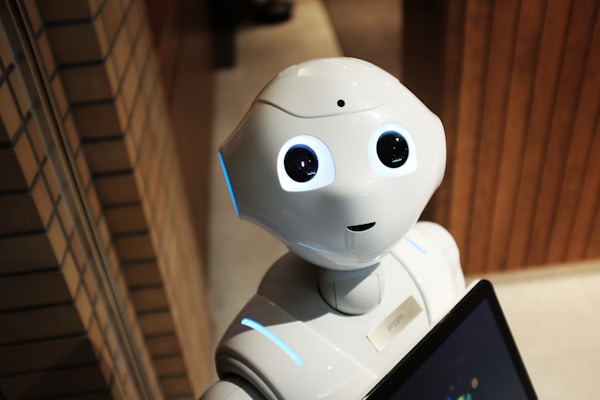
For decades, humanoid robots were a promise that kept receding. Every few years a new video would go viral — a robot walking, a robot doing a backflip, a robot folding laundry in a lab — and then nothing. The technical demonstrations never translated into products. The machines were fragile, expensive, and capable only in carefully controlled conditions.
That era appears to be ending.
In 2025 and 2026, humanoid robots moved from research curiosity to commercial product at a pace that has surprised even the researchers building them. Tesla's Optimus is working in Tesla factories. Figure AI's robots are deployed at BMW. Agility Robotics' Digit units are moving packages in Amazon warehouses. The breakthrough wasn't one dramatic moment — it was the convergence of three things: better AI brains, cheaper hardware, and the economics of labor shortage finally making the investment math work.
The Players
Tesla Optimus
Tesla is in a unique position to build humanoid robots at scale. The company has more real-world robotics data than anyone — every Tesla vehicle is essentially a sensor-laden robot navigating the real world. The same AI training infrastructure that makes Tesla's autopilot work is being adapted for Optimus.
Elon Musk has made increasingly bullish claims: that Optimus will be the most valuable product Tesla ever builds, that it will eventually outsell Tesla's cars, and that the company could eventually produce millions of units per year. The current deployment is internal — Optimus units working in Tesla's own factories, learning on the job.
The stated target price of $20,000–$25,000 per unit, if achieved at scale, would be transformative. At that price point, a humanoid robot becomes cheaper than a human worker within 1–2 years of deployment.
Figure AI
Figure AI raised $675 million in early 2024 from a consortium that included Microsoft, Nvidia, Amazon, OpenAI, and Intel — essentially a who's-who of tech that want to be positioned in whatever the humanoid robot ecosystem becomes.
Figure's approach emphasizes rapid learning through demonstration. Their robots can be shown a task, and through a combination of imitation learning and reinforcement learning, generalize it to new variations. The BMW deployment — Figure robots working in car manufacturing — is a milestone: it's the first commercial deployment of a humanoid robot by a major manufacturer in a real production environment.
Agility Robotics (Amazon)
Agility's Digit robots are less humanoid in aesthetic — they look more like a bird walking backwards than a human — but they're doing genuinely useful work: moving totes in Amazon fulfillment centers. Amazon's investment and deployment is significant because it comes with the volume and standardized environment that makes iterative improvement faster.
Boston Dynamics
The company that made humanoid robots famous with YouTube videos has continued to advance its Atlas platform. Atlas can now perform tasks like sorting packages and handing objects to human workers. Boston Dynamics' parent company Hyundai has announced plans for broader commercial deployment.
Chinese Competitors
Unitree, Fourier Intelligence, and a dozen other Chinese robotics companies are developing humanoid robots with impressive hardware capabilities and aggressive pricing. The cost of humanoid robot hardware is falling rapidly, partly due to Chinese manufacturing efficiency in servo motors, sensors, and structural components.
What's Actually Different Now
The previous generation of humanoid robots failed to commercialize for three reasons: they were too fragile, too expensive, and too dumb. The 2026 generation is addressing all three:
They're smarter. Large language models and vision-language models give modern robots an understanding of context and instructions that previous systems lacked. A robot that can be told "pick up the red box and put it on the shelf to the right" in natural language, and execute it reliably across variable conditions, is genuinely new.
They're more robust. Advances in actuator design (the motors that move robot joints) have produced systems that can take falls, handle varied surfaces, and operate for hours without failure. The shift from hydraulic to electric actuators has made the systems lighter and more controllable.
The software learning pipeline is faster. Simulation-to-reality transfer — training robots in simulated environments and deploying them in the real world — has improved dramatically. A robot can now learn a new task in hours rather than months.
The Labor Economics
The economic case for humanoid robots is driven by a simple and uncomfortable arithmetic: in many developed countries, human labor is increasingly scarce and expensive, and the work that robots can now do overlaps increasingly with the work humans do in warehouses, factories, and logistics.
A $25,000 humanoid robot that works three shifts with no breaks, no benefits, no turnover, and improving capability over time represents a fundamentally different cost structure than a $20/hour human worker. The math crosses over within 2–3 years of deployment assuming reasonable uptime.
The sectors most immediately exposed:
- Warehousing and logistics: repetitive, structured, high turnover
- Manufacturing: assembly, quality control, materials handling
- Retail stocking: inventory management, shelf restocking
- Agriculture: harvesting and handling of specific crops
The sectors that are more protected for now:
- Complex care work: nursing, childcare, elder care requiring genuine human judgment
- Skilled trades: plumbing, electrical, construction (highly variable environments)
- Creative and knowledge work: though AI is attacking this from a different direction
What This Means for Workers
The honest answer is that the displacement effects are coming, and they will be uneven. Workers in repetitive physical jobs in structured environments face the most near-term risk. The transition will not be uniform or fair — it will be faster in wealthy countries with higher labor costs, and slower in countries where human labor is still cheaper.
History suggests that automation displaces specific tasks rather than eliminating jobs entirely — but history was dealing with slower transitions. The current convergence of AI and robotics is faster than previous automation waves, and the breadth of tasks that robots can now handle is wider.
The honest framework: there will be significant disruption to specific job categories, new jobs will be created (robot maintenance, training, deployment, AI systems), but the transition between old and new is painful for the workers caught in between who lack the time, resources, or support to adapt.
Key Takeaways
-
Humanoid robots are no longer a future promise. They are in active commercial deployment right now in factories and warehouses.
-
The cost curve is the story. As prices fall from $25,000 to $10,000 to $5,000, the number of economically viable use cases expands enormously.
-
The AI brain is as important as the hardware body. The differentiator between robot companies is increasingly the software learning stack, not the physical engineering.
-
Labor displacement will be real and uneven. The most at-risk jobs are repetitive, physical, and structured. The transition will be faster than most people expect.
-
Chinese competition will compress hardware prices rapidly. Just as with solar panels and EVs, Chinese manufacturing scale will drive down robot hardware costs — accelerating both adoption and disruption.
Conclusion
The humanoid robot moment is not like previous robotics hype cycles. The hardware works. The software has crossed a threshold. The economics increasingly favor deployment. And the companies involved — Tesla, Amazon, BMW, Microsoft — are not university research labs; they are deploying these systems in production because the business case is real.
The next five years will determine whether this is a gradual transition or a rapid one. Either way, the world of work is about to look fundamentally different. The question is not whether humanoid robots will be a major feature of the economy — it's how fast, and who helps the people whose jobs they replace.
Which industries do you think will be most transformed first by humanoid robots? The timeline is compressing faster than the headlines suggest.
Feedback
Have feedback, found an error, or want to suggest a topic?
We would love to hear from you.
Submit Feedback
Publixly Feedback FormAbout the Author
Suraj Singh
Founder & Writer
Entrepreneur and writer exploring the intersection of technology, finance, and personal development. Passionate about helping people make smarter decisions in an increasingly digital world.
You Might Also Like
AI & Technology
Robotics in Everyday Life: Where We Are in 2025
Robots have moved well beyond factory floors — in 2025, they're delivering packages, assisting surgeons, tending crops, and slowly entering our homes in ways that are reshaping everyday life.
AI & Technology
Automation and Job Displacement: 500M Workers Replaced Faster Than Predicted
AI, robotics, automation accelerated job displacement. 500M+ jobs eliminated. Reskilling impossible at scale. Technological unemployment crisis.
Career & Remote Work
AI Is Coming for White-Collar Jobs: Who's at Risk and What to Do Now
AI Is Coming for White-Collar Jobs: Who's at Risk and What to Do Now: $1 impact and 70% cascading effect analyzed in detail.